
Few creatures in the animal kingdom have a survival trick quite as clever as the Greater mouse-eared bat’s. When an owl draws near, this small, unassuming bat doesn’t flee in silence. Instead, it mimics the buzzing of a giant hornet, a sound capable of confusing a predator just long enough to escape.
That one adaptation makes the Greater mouse-eared bat worth a closer look. But its story doesn’t end there. From its wide-ranging habitat to its surprisingly long lifespan, this bat species carries plenty of fascinating traits that often go unnoticed.
This guide covers what a Greater mouse-eared bat actually is, how its hornet-mimicking defense works, and what homeowners should know if bats turn up near their property. If you’re dealing with a bat problem in your home, Budget Animal Removal in Indianapolis, Indiana offers safe and humane solutions.
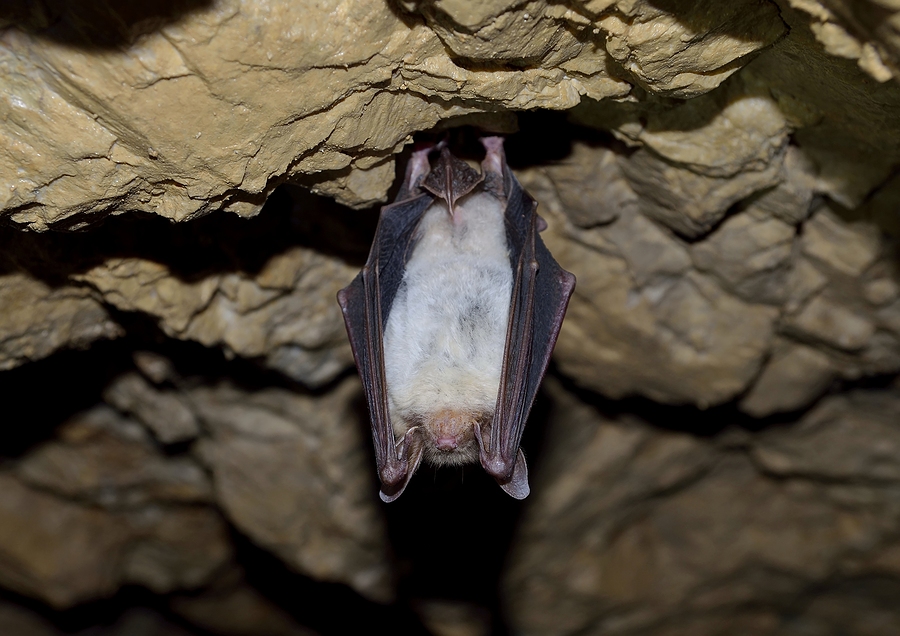
What Is a Mouse-Eared Bat?
The term “mouse-eared bat” refers to species in the genus Myotis, part of the Vespertilionidae family. The Greater mouse-eared bat, Myotis myotis, is the best known and largest member of this group.
Physical Description and Habitat
True to its name, the Greater mouse-eared bat has long ears, each stretching longer than it is wide, paired with a lance-shaped tragus (the small flap of skin near the ear canal). It’s a relatively large bat by Myotis standards, with a body length of roughly 6.5 to 8.0 centimeters and a wingspan between 36.5 and 45.0 centimeters. Weighing in at 20 to 45 grams, females tend to run larger than males (Animal Diversity Web, 2002).
These bats favor caves, attics, and buildings with less stable temperatures, including old churches and castles. They also roost in open, lightly wooded forests, and have adapted well to urban and suburban environments.
Geographic Distribution and Range
Greater mouse-eared bats are native to Eurasia and parts of northern Africa. The species once lived in the United Kingdom but has been extinct there since 1990 (Animal Diversity Web, 2002). They are not native to North America, so homeowners in places like Indiana won’t encounter this exact species, though other native Myotis bats share many of its habits.
How Does a Greater Mouse-Eared Bat Avoid Owls?
The Greater mouse-eared bat’s standout trait is its ability to mimic the buzzing sound of the giant European hornet (Vespa crabro) when threatened. Researchers studying this behavior in Myotis myotis found that the bat produces a buzz closely resembling that of the hornet, a form of acoustic mimicry designed to deter predators.
Why This Strategy Works Against Predators
Owls are a primary threat to mouse-eared bats, and most animals, owls included, instinctively avoid hornets due to their painful sting. By imitating that buzz, a bat under threat can create just enough hesitation in an approaching owl to slip away unharmed.
The Science Behind the Buzz
While the full experimental details behind this discovery haven’t been independently verified, the underlying concept, acoustic mimicry as an anti-predator defense, is well documented in other species throughout nature. For the Greater mouse-eared bat, this buzzing imitation stands as one of the more creative predator-avoidance strategies among mammals.
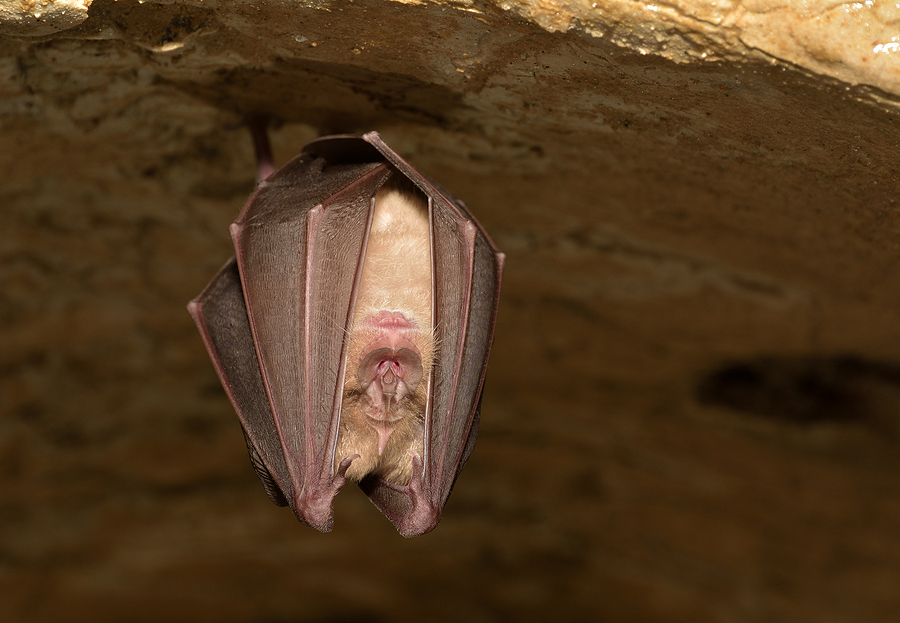
Fun Facts About Greater Mouse-Eared Bats
Beyond its hornet trick, the Greater mouse-eared bat has a surprising number of behaviors that make it stand out among bat species.
Echolocation and Hunting Patterns
Like most bats, the Greater mouse-eared bat relies on echolocation, using ultrasonic calls to navigate and locate prey in the dark. This bat tends to forage close to the ground, flying at heights of roughly 5 to 10 meters while hunting (Animal Diversity Web, 2002).
Diet and Feeding Habits
Mouse-eared bats are opportunistic insectivores with a particular taste for ground beetles. They also eat large moths and grass beetles, often gleaning insects directly off the soil surface in open woodlands with sparse ground cover. On a typical night, a mouse-eared bat eats between 25 and 50 percent of its body weight (Animal Diversity Web, 2002).
Lifespan and Reproduction
Most Myotis bats live around 6 to 7 years, but the mouse-eared bat has been known to live far longer. One individual in the UK was recorded at 13 years old, and some wild bats have reached as old as 22 (Animal Diversity Web, 2002).
Reproduction follows a seasonal pattern. Mating is promiscuous, with ovulation and fertilization typically occurring in February. Gestation lasts about 60 to 70 days, and most births happen between April and June. Pups are born blind, cling to their mothers for roughly two weeks, and become independent after about two months, just in time to build fat reserves for hibernation.
Social Behavior and Roosting Preferences
Mouse-eared bats are social creatures, typically roosting in groups of 10 to 100 individuals. Their summer and winter roosts can sit more than 10 kilometers apart, and during hibernation, their heart rate drops dramatically, from around 600 beats per minute down to just 18 to 80 (Animal Diversity Web, 2002).
Signs of Bats in Your Home
While mouse-eared bats stick to Eurasia and northern Africa, Indiana homeowners aren’t immune to bat activity. Native Myotis species and other local bats can take up residence in attics, chimneys, and wall voids, especially in older homes or buildings with easy points of entry.
How to Tell If Bats Are Nearby
Common signs include small droppings near entry points, a lingering musty odor, scratching sounds in walls or ceilings, and dark staining around gaps where bats squeeze through. Spotting a bat at dusk flying near your roofline is another clear signal.
Why Professional Removal Matters
Bats can carry rabies, so direct contact should always be avoided. Handling a bat with bare hands or attempting to seal them inside a structure can pose serious health and safety risks. Professional bat removal ensures bats are safely relocated without harming the animals or exposing your household to disease.
A Remarkable Bat Worth Understanding
From its hornet-mimicking defense to its surprisingly long lifespan, the mouse-eared bat proves that even the smallest creatures can carry the most intriguing survival strategies. While this particular species won’t be found in Indiana backyards, local bats share many of the same habits and can pose similar challenges when they move into homes.
If you’ve noticed signs of bats in your attic or walls, don’t wait for the problem to grow. Budget Animal Removal in Indianapolis, Indiana offers safe and humane bat removal and control. Get a free estimate today.
Related Posts:
Indiana’s Brown Bats: Facts, Risks, and Humane Removal
Are Bat Houses a Good Idea? A Guide for Indiana Homeowners
Why Bats Are the Unsung Heroes of Our Ecosystem